










Sourcing is one of the most critical areas impacted by today’s volatile global electronics market, as supply chain disruptions can cause delays and unforeseen costs. Therefore, effective sourcing risk management has become an absolute necessity, and the ability to calculate BOM costs in real-time can turn out to be your strongest suit.
In this blog, we’ll see:
The power of real-time Bill of Materials (BOM) costing to reduce sourcing risks, enhance visibility, and build a more resilient supply chain.
How real-time BOM costing, coupled with advanced BOM management techniques and insightful BOM analysis, can empower businesses to proactively identify and mitigate sourcing risks.
How this dynamic approach to BOM cost analysis is not just about numbers, but about strategic foresight and agile decision-making to reduce sourcing risks.
What is BOM costing and why it matters
BOM costing is the process of calculating the total cost of producing an electronic product by summing the costs of all its individual components. This includes direct material costs, but can also extend to labor, overhead, and other associated expenses (e.g. new tariffs). Accurate BOM costs are fundamental for several reasons:
Pricing strategy: BOM costs form the bedrock of product pricing. Inaccurate costing can lead to underpricing (eroding profits) or overpricing (losing competitiveness).
Profitability analysis: understanding true BOM costs allows businesses to accurately assess the profitability of each product.
Budgeting and financial planning: reliable BOM cost data is crucial for accurate financial forecasting and resource allocation.
Inventory management: knowing component costs helps in optimizing inventory levels and managing working capital effectively.
Decision-making: from make-or-buy decisions to design modifications for BOM cost optimization, accurate costing informs critical business choices.
BOM in project management: the bill of materials is a central document in BOM in project management, guiding procurement, assembly, and quality control processes. Accurate costing ensures projects stay within budget.
Effective BOM management is crucial: it’s not just about listing parts, it’s about maintaining the accuracy, integrity, and accessibility of data throughout the product lifecycle, to facilitate precise costing and efficient manufacturing operations. The process of how to calculate BOM costs accurately is a critical skill for any manufacturing enterprise.
Limitations of traditional costing approaches
For years, companies relied on manual or semi-automated methods for BOM costing, often using spreadsheets or legacy systems. While these approaches may have sufficed in simpler times, they now present significant limitations and expose businesses to numerous sourcing risks.

Static data
Traditional BOM costing often relies on static data. Component prices and availability information are typically gathered periodically – perhaps quarterly or even annually – from supplier catalogues or historical purchase orders. In today’s fast-moving electronics market, this data becomes outdated almost as soon as it’s recorded.
Market volatility: component prices can fluctuate wildly due to supply and demand dynamics, raw material cost changes, or geopolitical events. A price quoted last month might be entirely irrelevant today, leading to significant variances in actual BOM costs compared to estimates.
Availability issues: a component readily available during the last data refresh might now be on allocation, have an extended lead time, or even be obsolete. Relying on static availability data can lead to production delays and a frantic scramble for alternatives, undermining sourcing efficiency.
Inaccurate forecasts: planning based on stale data inevitably leads to flawed demand forecasting and inventory management, creating further sourcing risks. This makes proactive sourcing risk management nearly impossible.
Hidden cost risks
Static costing methods often fail to capture the full spectrum of potential costs, leading to hidden risks that can severely impact profitability.
Expediting fees: when static data suggests a component is available, only for procurement to find it’s not, rush orders and expediting fees become necessary, inflating BOM costs.
Re-design costs: if a critical component becomes unavailable or its price skyrockets, engineers might need to undertake costly and time-consuming re-designs. Effective BOM analysis should preempt this.
Minimum order quantities (MOQs) and price breaks: static systems may not accurately reflect current MOQ requirements or available volume price breaks from suppliers, hindering true cost optimization.
Lifecycle mismatches: a component might be nearing its end-of-life (EOL), a fact not always apparent in static databases. Designing such a component into a new product creates significant future supply challenges and obsolescence management costs. A thorough BOM cost analysis would flag this.
Supplier viability: the financial health or reliability of a supplier isn’t typically tracked in static BOMs, yet supplier failure is a major operational vulnerability.
Delays in procurement and planning
The reliance on outdated information inherent in traditional costing methods directly translates into delays across the procurement and planning cycles.
Lengthy quoting processes: manually verifying current prices and availability for each component in a complex BOM is time-consuming, delaying quote generation for customers and internal project approvals. This directly impacts sourcing efficiency.
Reactive problem-solving: instead of proactively addressing potential issues, teams are often caught off-guard by price changes or stockouts, leading to fire-fighting and reactive decision-making. This reactive stance undermines strategic planning.
Inefficient resource allocation: time spent manually updating BOMs, chasing supplier information, and resolving discrepancies is time taken away from more strategic activities like value engineering or supplier development. The integrity of the BOM in project management suffers due to these inefficiencies.
These limitations highlight a critical need for a more dynamic, responsive approach to BOM management and costing, one that can keep pace with the complexities of the modern supply chain and help reduce sourcing risks.
The rise of real-time BOM costing
In response to the inadequacies of traditional methods, real-time BOM costing has emerged as a game-changing solution. It leverages modern technologies to provide up-to-the-minute insights into component prices, availability, lead times, and potential risks, directly from a vast network of suppliers and distributors. This dynamic approach transforms BOM management from a static, historical record-keeping exercise into a proactive, strategic tool for sourcing risk management and BOM cost optimization.
Real-time BOM costing empowers businesses to:
Make informed decisions based on current market realities.
Identify and mitigate supply issues before they escalate.
Improve quoting accuracy and speed.
Enhance collaboration between design, engineering, and procurement teams.
Achieve significant cost reduction in supply chain management.
The shift towards real-time data is not just a trend; it’s a fundamental evolution in how companies approach BOM analysis and overall supply chain operations. Understanding how to calculate BOM costs with real-time data provides a significant competitive edge.
Technologies enabling real-time costing
Several key technologies underpin the functionality and effectiveness of real-time BOM costing systems. These innovations work together to deliver the speed, accuracy, and comprehensive insights needed for modern supply chain navigation.
API integrations
Application Programming Interfaces (APIs) are the behind-the-scenes of real-time data exchange. In the context of BOM costing, APIs connect sourcing platforms directly to the live databases of component manufacturers, distributors, and suppliers.
Instant data access: when a BOM is uploaded or a component is queried, the system uses APIs to instantly fetch current pricing, stock levels, lead times, and lifecycle information from multiple sources.
Broad coverage: well-designed platforms integrate with a vast network of global and regional suppliers, ensuring comprehensive market visibility.
Reduced manual effort: APIs eliminate the need for procurement teams to manually visit multiple supplier websites or make countless calls to gather information, dramatically improving sourcing efficiency.
Data accuracy: by pulling data directly from the source, the risk of human error associated with manual data entry is significantly reduced, leading to more reliable costings.
Cloud-based sourcing platforms
Cloud computing provides the ideal infrastructure for real-time BOM costing.
Accessibility and collaboration: cloud platforms can be accessed from anywhere with an internet connection, facilitating seamless collaboration between dispersed teams, including design, engineering, procurement, and even contract manufacturers. This enhanced collaboration is vital for effective BOM management.
Scalability: cloud solutions can easily scale to handle vast amounts of data and a growing number of users and transactions, accommodating the needs of businesses of all sizes.
Centralized data: all BOM versions, component data, supplier information, and historical pricing can be stored in a centralized, secure repository, creating a single source of truth. This is fundamental for robust BOM analysis.
Automatic updates: software updates, new features, and supplier data enhancements are typically managed by the provider, ensuring users always have access to the latest capabilities without IT overhead.
AI and predictive analytics
Artificial Intelligence (AI) and predictive analytics are increasingly being integrated into real-time BOM costing platforms, adding another layer of intelligence and foresight.
Price trend prediction: AI algorithms can analyze historical pricing data, market trends, and even news sentiment to predict future price fluctuations for specific components, aiding in proactive BOM cost optimization.
Risk assessment: AI can identify components with a high risk of obsolescence, price volatility, or supply disruption based on a multitude of factors, contributing significantly to sourcing risk management. Our own research into supply chain risk assessment highlights the growing importance of such predictive capabilities.
Alternative part suggestions: when a preferred component faces issues, AI can intelligently suggest suitable alternative parts, considering technical specifications, price, availability, and compliance.
Demand forecasting: by analyzing historical BOM data and sales forecasts, AI can help improve the accuracy of component demand predictions, leading to better inventory planning and reduced carrying costs. This sophisticated approach to BOM cost analysis helps in strategic procurement.
These technologies collectively empower businesses to move beyond reactive responses to supply chain events and embrace a more predictive, agile, and strategic approach to sourcing and BOM management.
Common sourcing risks in electronics and manufacturing
The electronics and manufacturing sectors are particularly vulnerable to a wide array of sourcing risks, as seen in our blog on the challenges in supply chain management. Understanding these common threats is the first step towards developing robust sourcing risk management strategies. Here’s a list of the 10 most common sourcing risks:
Price volatility.
Component shortages and allocation.
Supplier unreliability or failure.
Geopolitical instability and trade disputes.
Natural disasters and force majeure events.
Component obsolescence.
Counterfeit components.
Logistics and transportation disruptions.
Compliance and regulatory changes.
Intellectual property (IP) risks.
Addressing these multifaceted challenges requires a comprehensive strategy, and as we’ll see, real-time BOM costing provides a powerful toolkit to tackle many of these issues head-on.
How real-time BOM costing helps reduce these risks
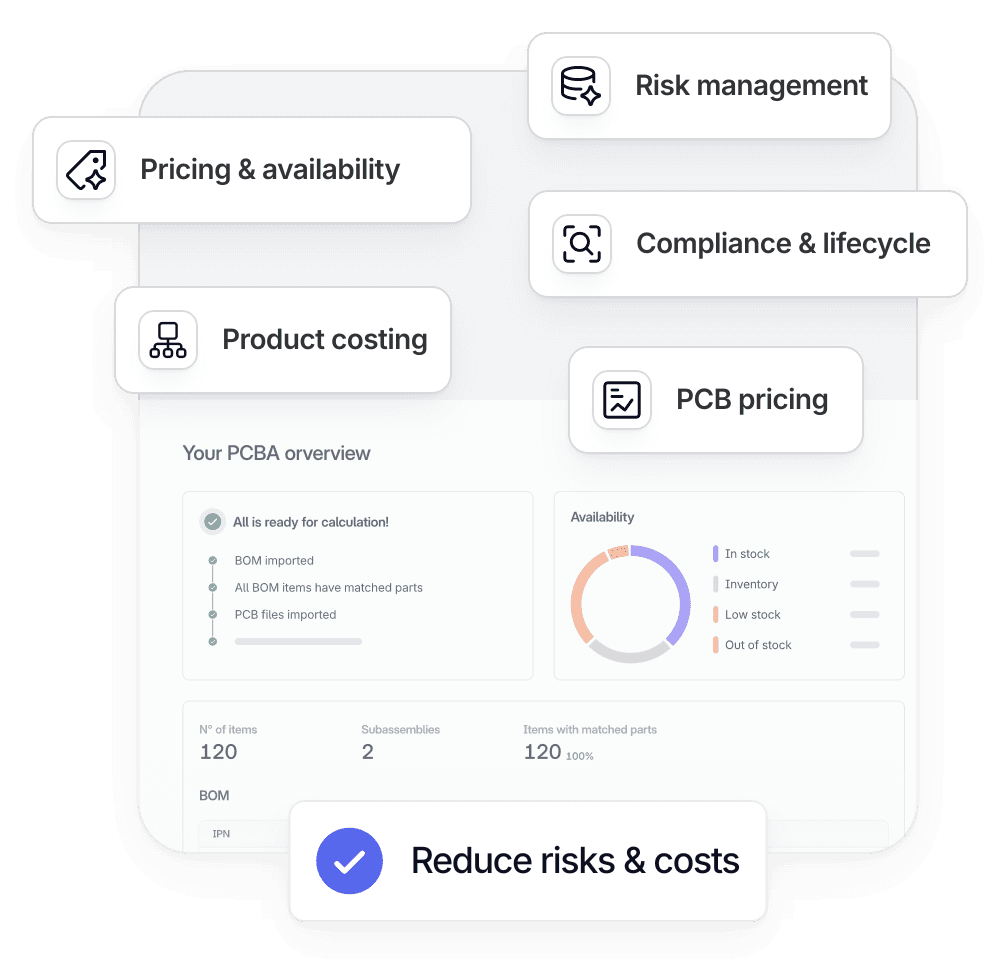
Real-time BOM costing, powered by the technologies discussed earlier, offers tangible solutions to mitigate the common sourcing risks prevalent in electronics and manufacturing. It shifts the paradigm from reactive damage control to proactive sourcing risk management, enabling businesses to anticipate issues and make data-driven decisions. Here’s how it directly helps reduce sourcing risk.
Live availability insights
Perhaps the most immediate benefit is access to live, dynamic component availability data. Instead of relying on outdated spreadsheets or supplier catalogues, procurement teams and engineers can see, in real-time, the stock levels of specific components across a global network of distributors.
Early warning system: if a critical component is showing low stock or extended lead times, teams are alerted instantly. This allows for quicker action, such as securing available stock or initiating the search for alternatives before a shortage impacts production. This significantly helps to reduce sourcing risks related to component shortages.
Informed design choices: engineers can check real-time availability during the design phase. Choosing components with healthy stock levels and multiple sources from the outset can prevent significant headaches. This proactive approach to BOM management is invaluable.
Reduced expediting: by knowing true availability, companies can avoid situations where they design-in or plan for a part that is unexpectedly unavailable, thus reducing the need for costly rush orders and contributing to BOM cost optimization.
Alternative sourcing suggestions
When a preferred component is unavailable, too expensive, or nearing end-of-life, real-time BOM costing platforms equipped with AI can automatically suggest viable alternatives.
Pre-vetted options: these systems often provide alternatives that are form-fit-function compatible or closely match key parameters, saving engineers significant research time.
Supply chain diversification: by easily identifying multiple sources and alternative parts, companies can reduce their reliance on single suppliers or specific components, a key strategy in sourcing risk management.
Faster problem resolution: instead of a lengthy manual search for replacements, alternatives are presented quickly, allowing for rapid decision-making and minimising production delays. This enhances sourcing efficiency. This automated support is vital for effective BOM cost analysis when facing supply disruptions.
Price change alerts
The volatile nature of component pricing is a major challenge. Real-time systems monitor prices continuously and can alert users to significant changes.
Budgetary control: alerts on price increases allow for immediate review of BOM costs and potential impacts on project budgets or product margins. This facilitates a more dynamic BOM cost analysis.
Opportunity identification: conversely, alerts on price drops can signal opportunities for cost savings through strategic purchasing, contributing to BOM cost optimization.
Negotiation leverage: armed with real-time market pricing information, procurement teams get a holistic view on part costs and stock. This understanding of how to calculate BOM costs accurately puts them in a stronger position to negotiate with suppliers.
Obsolescence risk flagging
Designing in components that are nearing their end-of-life (EOL) is a significant and costly mistake. Real-time BOM costing tools can flag these components early.
Proactive redesign: identifying EOL or “Not Recommended for New Designs” (NRND) parts during the BOM upload or design phase allows engineers to select more sustainable alternatives, avoiding future supply disruptions. This is a crucial element of long-term BOM management.
Last-time buy management: for products already in production, early EOL warnings provide more time to plan for last-time buys or to phase in alternative components smoothly.
Reduced inventory write-offs: by avoiding obsolete parts, companies reduce the risk of being stuck with unusable inventory.
Faster RFQ and purchasing decisions
The automation and real-time data access inherent in these systems dramatically accelerate the Request for Quotation (RFQ) and purchasing processes.
Quick quoting: sales teams and project managers can generate accurate quotes much faster because component pricing and availability are instantly accessible. This speed is possible thanks to smart integrations with real-time BOM data, typically a feature of the best CPQ software for manufacturing.
Streamlined procurement: procurement teams can consolidate demand, compare offers from multiple suppliers, and make purchasing decisions more efficiently. The clarity on how to calculate BOM costs is instantaneous.
Improved collaboration: with all stakeholders working from the same real-time data set (design, engineering, procurement), decision-making is more aligned and faster. This cohesive approach to the BOM in project management is critical.
By directly addressing these key areas, real-time BOM costing significantly strengthens a company’s ability to navigate the complexities of the modern electronics supply chain, offering a robust framework for anticipating issues and making informed choices. This proactive stance contributes to overall cost reduction in supply chain management.
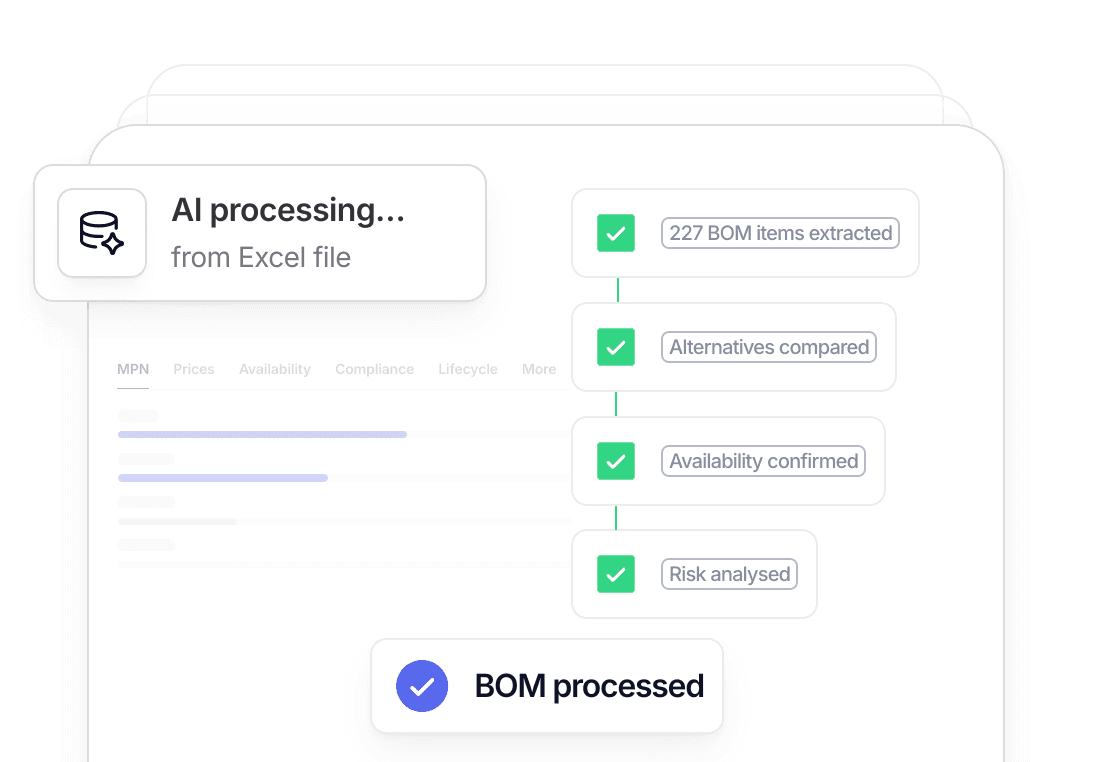
Smarter sourcing begins with BOM visibility
In the intricate and often turbulent landscape of electronics manufacturing, the ability to see clearly is paramount. The traditional, often opaque, methods of sourcing and BOM costing are no longer sufficient to navigate the myriad of challenges that can derail projects, inflate product costs, and erode profitability. The journey towards smarter sourcing, and ultimately, a more resilient and competitive business, begins with achieving comprehensive visibility into your Bill of Materials – not just as a static list, but as a dynamic entity influenced by real-time market conditions. This is where the true power of modern component data tools shines, particularly those offering real-time BOM analysis and costing.
The bottom line is that real-time BOM costing is no longer a luxury, but a foundational element of effective sourcing risk management. It empowers organizations to move from a reactive stance, constantly fighting fires, to a proactive one, anticipating challenges and capitalising on opportunities. By providing live availability insights, suggesting viable alternative sources, alerting to price changes, flagging obsolescence risks, and enabling faster, more informed RFQ and purchasing decisions, these systems directly contribute to your ability to build a more resilient operation. This proactive approach fosters greater operational agility and is key to achieving significant BOM cost optimization and broader cost reduction in supply chain management. Furthermore, understanding how component cost data impacts financial planning dynamically transforms project viability assessments, embedding agility into the core of your BOM in project management.
At Luminovo, we understand the critical importance of BOM visibility and intelligent sourcing. Our suite of electronics supply chain management solutions is designed to bring clarity and control to your entire design-to-source process. Our BOM management software provides the real-time data and analytical power you need to conduct thorough BOM analysis. It’s engineered to help you improve your sourcing outcomes by offering immediate insights into component availability, pricing, and lifecycle status from a global network of suppliers.
Luminovo’s product costing software takes this further, allowing for detailed and accurate product cost calculation, incorporating not just material costs, but also manufacturing overheads, labor and other costs (i.e. import taxes), all informed by real-time data. For businesses looking to streamline their quoting processes, our configure price quote software integrates seamlessly, enabling rapid and accurate quote generation. We also empower better communication through our customer collaboration platform, ensuring all stakeholders are aligned.
Specifically for Electronics Manufacturing Services, our EMS software is tailored to meet the unique challenges of contract manufacturing, where component data accuracy and cost control are daily necessities. We help you transform your manufacturing calculation from manual, error-prone tasks towards smart automation. By leveraging Luminovo, you ultimately improve OEM supply chain performance.
Embrace the future of sourcing. With real-time BOM costing and intelligent BOM management, you can turn supply chain uncertainties into strategic advantages, ensuring your business is not just surviving, but thriving in the dynamic world of electronics manufacturing.